
On this page
- What buildings are covered?
- How does commercial gutter work differ from residential?
- Why sizing matters on a big roof
- What does a maintenance plan cover?
- Stormwater and discharge
- Getting a commercial quote
- Common commercial problems
- Long runs and expansion
- Churches and institutional buildings
- Apartments and HOAs
- Safety and access
What buildings are covered?
Queen City Gutter Co connects callers with independent local gutter contractors, who give the estimates and do the work. Commercial gutter work in the Charlotte area covers a wide spread of buildings:
- Retail and offices in strip centers along Independence Boulevard, South Boulevard and in SouthPark.
- Churches with tall, steep roofs and long runs.
- Apartment and townhome communities, where dozens of buildings share one maintenance plan.
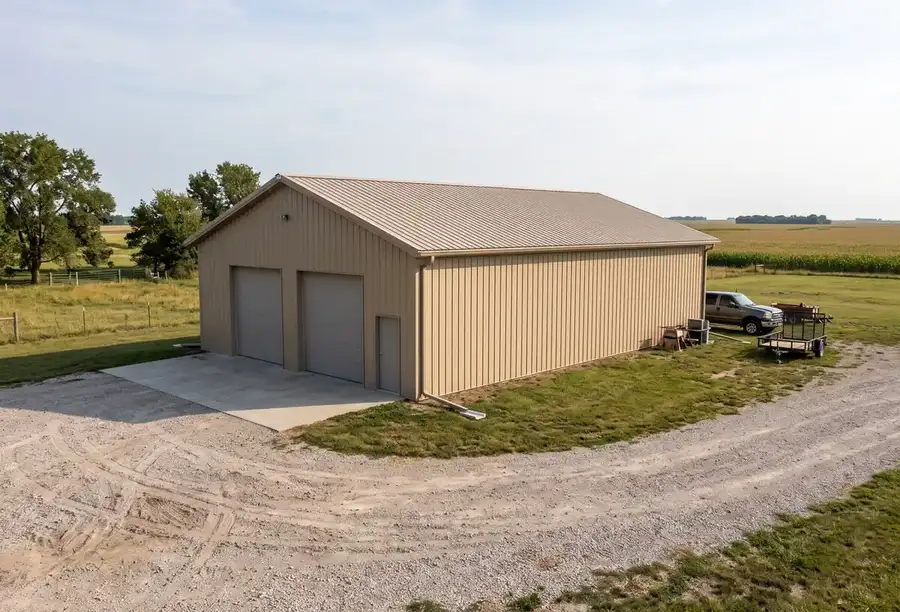
- Warehouses and metal buildings around the airport, Steele Creek and University City.
- Restaurants and small businesses in older commercial blocks in NoDa, Plaza Midwood and South End.
- Schools, clinics and offices with flat or low-slope roofs.
How does commercial gutter work differ from residential?
| Factor | House | Commercial building |
|---|---|---|
| Gutter size | 5 or 6 inch K-style | 6 to 8 inch box or custom-formed |
| Downspouts | 2x3 or 3x4 | 4x5, 6-inch round or larger |
| Roof drainage | Gutters at eaves | Gutters, scuppers, internal drains |
| Metal | Aluminum mostly | Heavier aluminum or steel |
| Access | Ladders | Lifts, roof access, safety plans |
| Schedule | Any weekday | Around tenants and business hours |
| Paperwork | Simple written quote | Insurance certificates, sometimes licensing |
Why sizing matters on a big roof
A commercial roof can drain thousands of square feet to one gutter. Charlotte's summer thunderstorms can drop more than an inch of rain in an hour, and that water has to leave the roof fast. Undersized gutters and downspouts overflow at the worst places: entrances, loading docks and walkways. A contractor should work out the roof area draining to each run and size the gutter, outlets and downspouts to match, with overflow scuppers where a flat roof could pond.
What does a maintenance plan cover?
- Scheduled cleaning, usually spring and late fall, more often under trees.
- Inspection of seams, sealant, hangers, scuppers and collector heads.
- Downspout checks at the base, where trucks and mowers do damage.
- Discharge checks, making sure water reaches the storm system and does not pond on paving.
- Photos and notes after each visit, so the owner can plan repairs.
- Storm visits after major weather.
Stormwater and discharge
Commercial sites often carry their own stormwater devices, such as ponds, underground storage or filters. Charlotte-Mecklenburg Storm Water Services notes that the responsibility for maintaining those systems can sit with the property owner, business or association. Gutter discharge that bypasses or overloads them can cause problems downstream. Keep downspouts tied into the system the site was designed for.
Getting a commercial quote
Ask for a written scope with gutter and downspout sizes, metal and gauge, how the roof will be accessed, safety arrangements, a schedule that suits tenants, and a certificate of insurance sent directly from the insurer. North Carolina requires a general contractor license for projects of $40,000 or more, so on bigger jobs check the license on the NC Licensing Board for General Contractors search.
Common commercial problems
| Problem | Typical cause | Usual fix |
|---|---|---|
| Overflow at entrances | Undersized gutter or downspout; clogged outlet | Larger outlets; added downspouts; cleaning |
| Leaking seams on box gutters | Aging sealant on long runs | Reseal; expansion joints; reline |
| Ponding on a flat roof | Blocked scupper or drain | Clear; add overflow scupper |
| Crushed downspouts | Trucks, carts, mowers | Replace; add guards or boots |
| Ice on walkways | Discharge across paving | Re-route discharge |
| Staining on walls | Overflow or leaking collector heads | Repair heads; clean outlets |
Long runs and expansion
Commercial buildings often have gutter runs much longer than a house. Metal expands and contracts with temperature, and over a long run that movement adds up. On box gutters and long K-style runs, contractors fit expansion joints so the gutter can move without tearing at the seams. Ask whether a long run on your building has them.
Churches and institutional buildings
Churches in Charlotte's older neighborhoods often have steep slate or shingle roofs, tall eaves, copper or built-in gutters and decorative downspouts. Work on them calls for lifts or scaffolding and, where the building is historic, care to match original materials. Schools and clinics may need work scheduled outside hours and with safety barriers around the work area.
Apartments and HOAs
Townhome and apartment communities in University City, Ballantyne, NoDa and elsewhere often have dozens of buildings with identical gutters. A maintenance plan that cleans and inspects every building on a schedule, logs repairs and handles storm visits keeps problems from building up. Matching color and profile across buildings matters for the look of the community.
Safety and access
Commercial gutter work often means lifts, roof access and fall protection. A contractor should be able to explain how the work will be accessed safely, how the area below will be protected, and how tenants and visitors will be kept clear. Ask for this in the written scope.